
Continuous Learning at SDG
Written by Bri Marshall
Here’s an inside look at the rich learning ecosystem SDG has intentionally built.
A Framework for Growth
SDG’s Learning Journey Advisory Committee helps enhance awareness and access to endorsed learning opportunities across the organization. Their Training Visibility & Partnership framework encourages employees to share feedback on courses, tools, and platforms—closing the loop so the entire company benefits.
This process ensures SDG’s learning ecosystem is not only robust but also continually improving.
Learning From Each Other
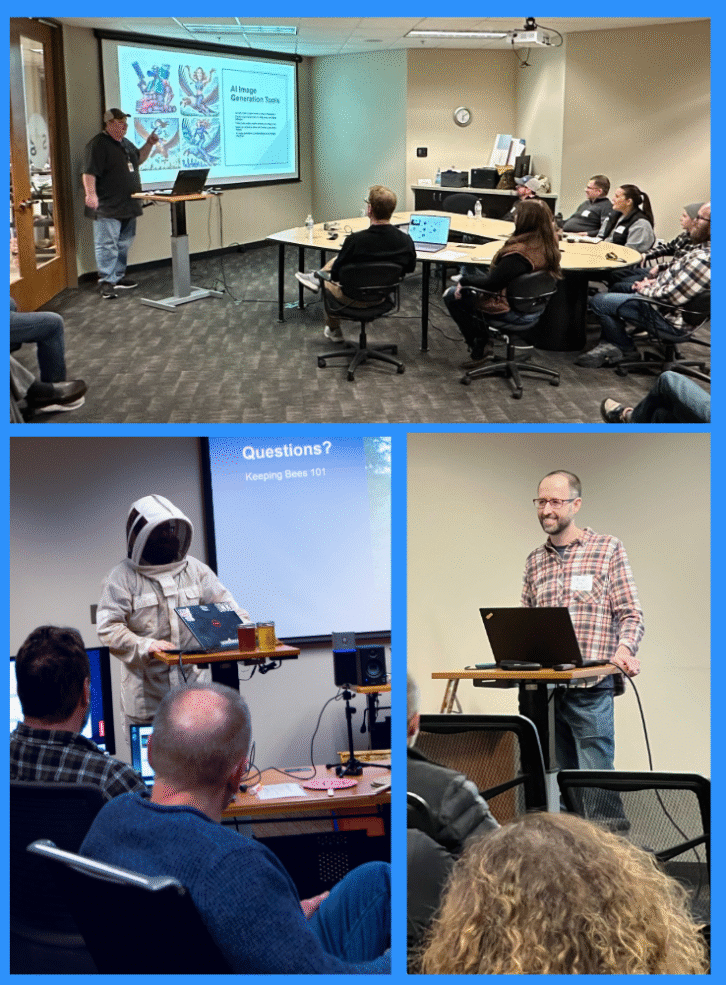
These gatherings showcase something special about SDG: our belief that the best learning often comes from inside.
Learning Through Community
SDG hosts more than a dozen Learning Communities—employee‑led groups centered on topics like AI, Agile, Cloud, Data, DevOps, Product, Writing, Java, Experience Design, and more. These communities meet throughout the year for discussions, workshops, guest speakers, and peer mentoring.
And because employee experience matters here, SDG also has Social Communities—from foodies and outdoor groups to fitness and gaming—recognizing that connection fuels learning just as much as content does.
Learning on Demand
Every SDG employee receives access to platforms like Udemy, opening the door to thousands of technical, leadership, and professional courses. This means you can explore new interests, upskill for your next project, or dive deep into emerging technologies whenever it fits your schedule.
It’s one of the many ways we ensure learning is continuous and accessible.
Key Takeaways
- Treat AI coding agents like junior teammates: helpful, fast, and imperfect—always apply your own judgment.
- Ask clear, focused questions and provide concrete examples to get the best results.
- Re-edit prompts instead of correcting the AI mid-stream to save time and context.
- Use AI most confidently for small, verifiable units of code, boilerplate, POCs, and test generation—always review the output.
- Be cautious when working in unfamiliar languages, domains, or with advanced math, encryption, and regex.
- Follow organizational and community guidelines, and be transparent when introducing AI-generated code into critical paths.
- Remember: you own the code, the consequences, and the pager—AI is an assistant, not a replacement.